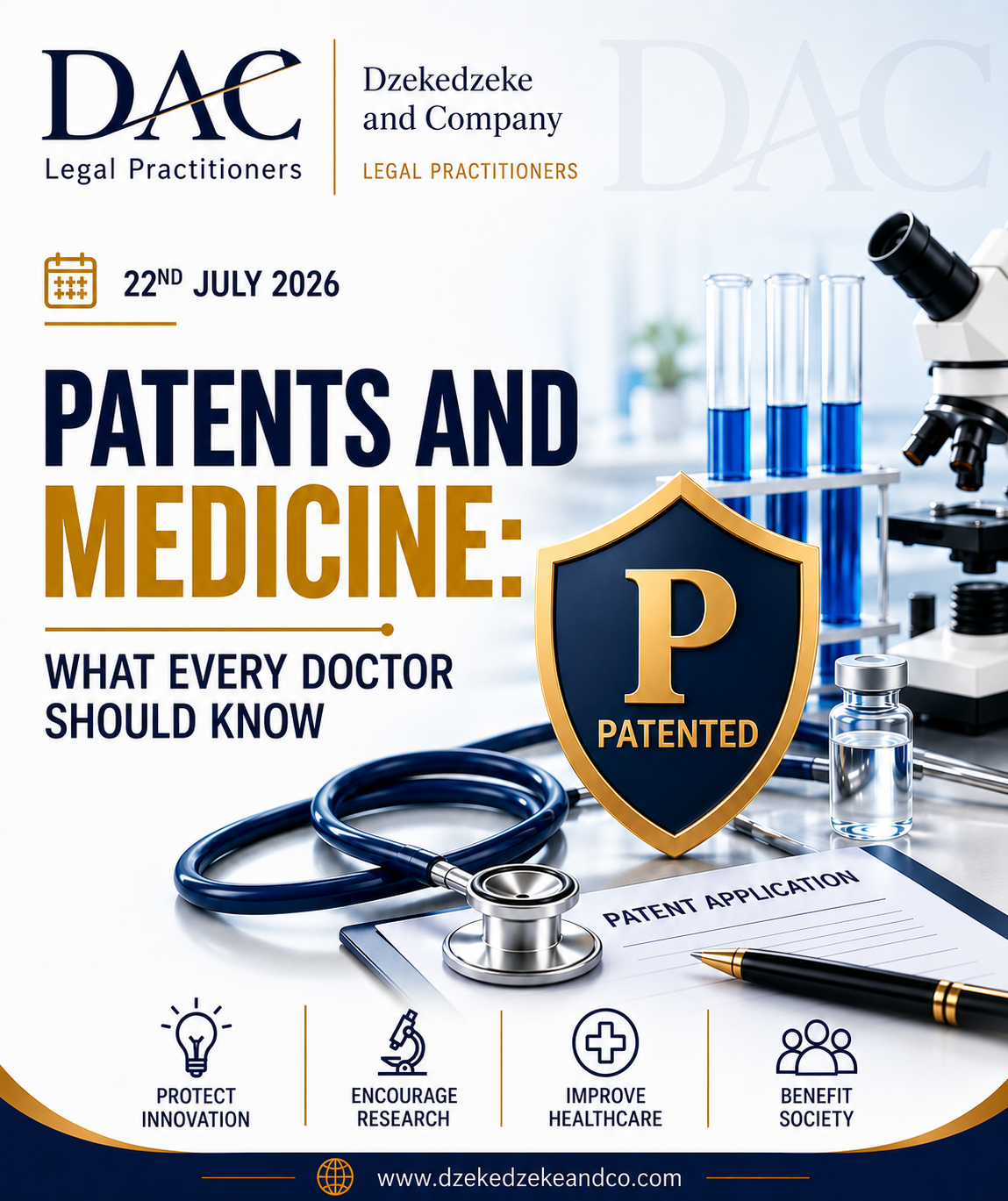
DAC IP INSIGHT – 22nd July 2026
Medical innovation has transformed healthcare, enabling doctors to diagnose diseases more accurately, perform life-saving procedures, and prescribe medicines that improve and extend lives. Behind many of these medical breakthroughs lies an important area of intellectual property law: patent law.
While patents are often associated with scientists, pharmaceutical companies, and inventors, doctors and other healthcare professionals also benefit from understanding how the patent system works. Every prescription, medical device, vaccine, and diagnostic tool may be connected to intellectual property rights that encourage innovation and support continued medical advancement.
A patent is a legal right granted to an inventor that gives them the exclusive right to make, use, sell, or license an invention for a limited period, usually twenty years from the filing date. In return, the inventor publicly discloses the invention, allowing society to benefit from the knowledge once the patent expires.
What Can Be Patented in Medicine?
In the medical field, patents commonly protect:
• New pharmaceutical compounds
• Vaccines
• Medical devices and equipment
• Diagnostic technologies
• Laboratory innovations
• Certain biotechnology inventions
Patent protection encourages research and development by allowing innovators to recover the substantial investment required to develop new medicines and medical technologies. Bringing a new medicine to market often requires years of scientific research, extensive clinical trials, regulatory approvals, and significant financial resources. Without legal protection, many innovators would struggle to justify such considerable investment.
At the same time, patent law seeks to balance private rights with the public interest. International intellectual property frameworks recognise that governments may, in appropriate circumstances, adopt lawful measures to promote access to essential medicines while continuing to encourage innovation. This balance helps ensure that scientific progress benefits both inventors and society.
Doctors routinely prescribe patented medicines and, once patent protection expires, generic alternatives become available. Understanding the distinction between patented and generic medicines enables healthcare professionals to appreciate the legal and commercial framework that supports pharmaceutical innovation while expanding access to affordable healthcare.
Not every medical discovery qualifies for patent protection. Generally, an invention must be new, involve an inventive step, and be capable of industrial application before a patent can be granted. In many jurisdictions, methods of medical treatment and surgical procedures are excluded from patentability for reasons of public policy.
Conclusion
Patent law plays a vital role in advancing healthcare. It promotes innovation, encourages investment in research and development, facilitates technological progress, and ultimately contributes to improved patient care and better health outcomes.
Innovation in medicine saves lives. Patent law helps create an environment where that innovation can continue to flourish for the benefit of inventors, healthcare professionals, patients, and society as a whole.
Dzekedzeke and Company remains committed to providing practical legal insights into intellectual property and the laws that shape innovation, business, and everyday life.