
DAC LEGAL INSIGHT
Imagine this:
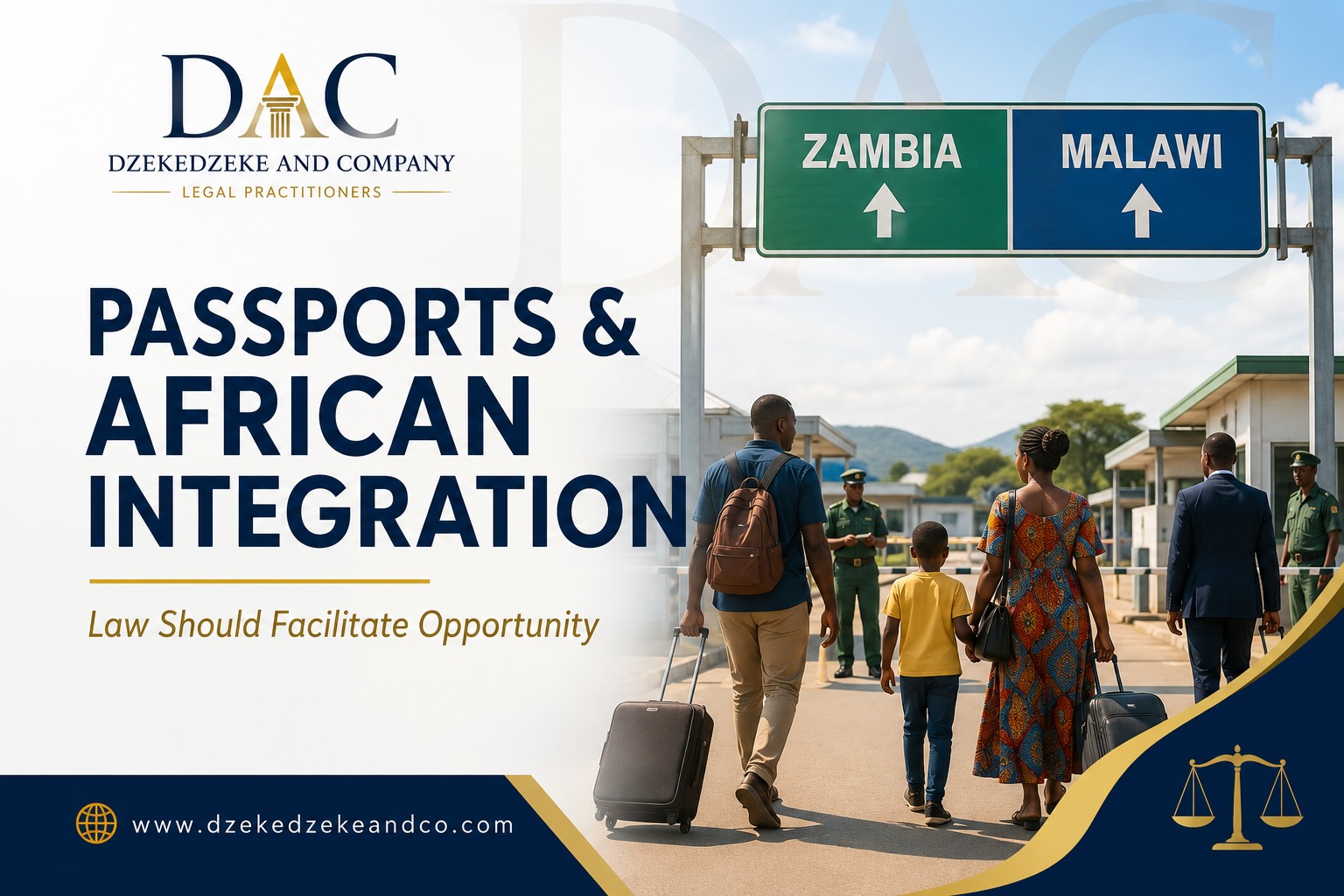
A Zambian family wishes to spend the weekend in Malawi. The languages sound familiar. Families have relatives on both sides of the border. The food, music, traditions, and history share many similarities. Yet before crossing the border, they must produce a passport.
It raises an interesting legal and policy question:
Should neighbouring African countries with deep historical, cultural, and economic ties continue to require passports from one another?
A passport serves an important legal purpose. It confirms a person’s nationality, protects against identity fraud, assists with border security, and enables governments to monitor who enters and leaves their territory. Every sovereign state has the right—and indeed the responsibility—to regulate its borders.
However, Africa is also pursuing a different vision.
Regional organisations such as the Southern African Development Community (SADC) and the African Union have long promoted greater freedom of movement, recognising that easier travel can stimulate trade, tourism, investment, education, and cultural exchange. While many SADC citizens already travel without visas to neighbouring countries, they generally must still present a valid passport because the region has not yet adopted a common travel document.
Perhaps the question is no longer whether borders should exist—they should. Rather, it is whether Africa can make crossing those borders simpler, safer, and more efficient.
Around the world, some regions have shown that countries can maintain secure borders while allowing easier movement for neighbouring citizens through shared travel arrangements and trusted identity systems.
For countries like Zambia and Malawi, whose peoples have enjoyed close relations for generations, greater cooperation on lawful travel could strengthen business, tourism, family connections, and regional prosperity without compromising national security.
The future of African integration may not lie in removing borders altogether. It may lie in making them work better for Africans.
Law should protect sovereignty—but it should also facilitate opportunity.
For legal advice on immigration, citizenship, international business, and cross-border legal matters, contact Dzekedzeke and Company.