DAC IP INSIGHT – 20th July 2026
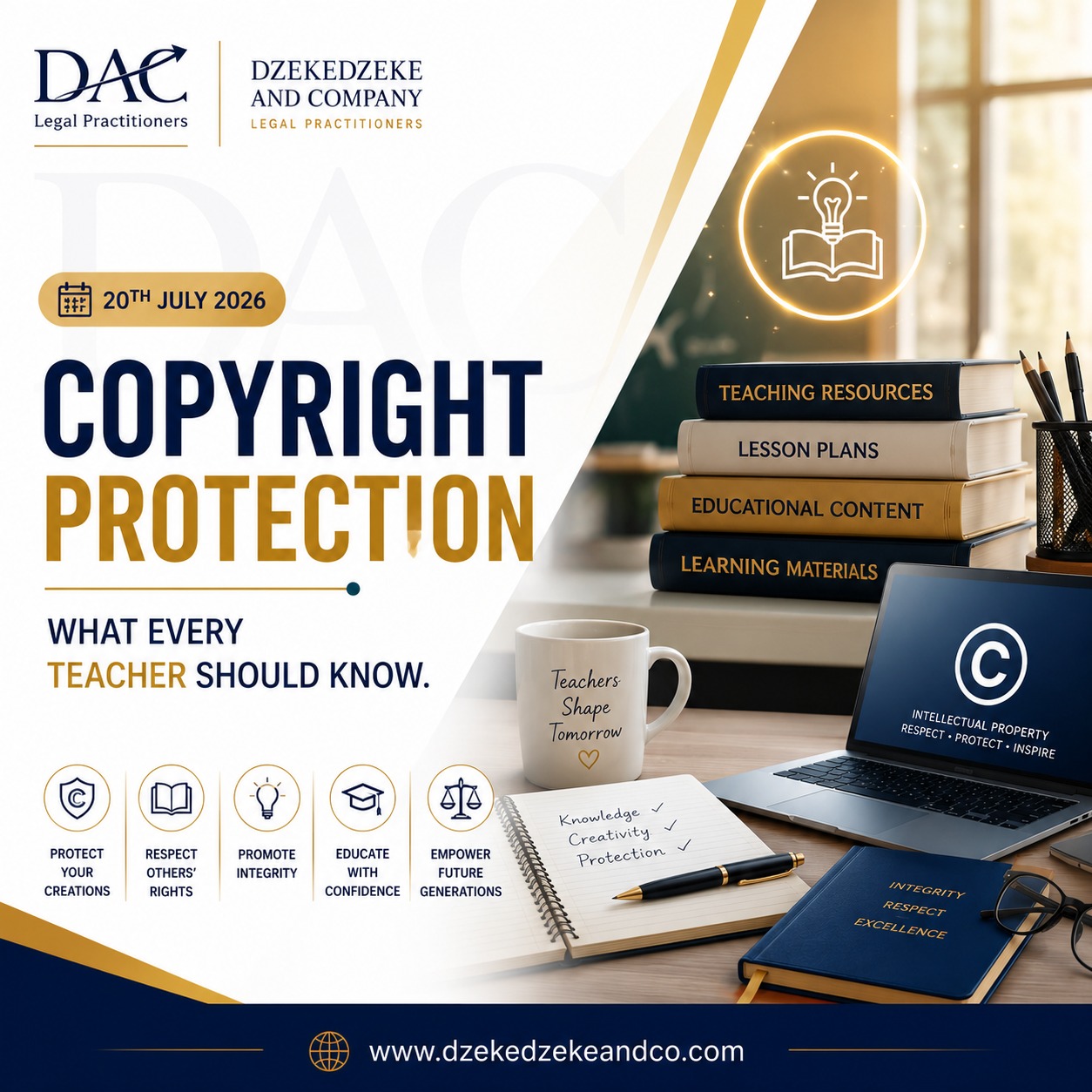
Teachers play one of the most important roles in shaping society. Every day, they create lesson plans, prepare presentations, develop teaching materials, write examinations, compile notes, produce videos, and design educational resources that enrich the learning experience of their students.
What many educators may not realise is that much of this work is protected by copyright law.
Copyright is a legal right that protects original literary, artistic, musical, dramatic, and other creative works from unauthorised copying, reproduction, adaptation, distribution, or public communication. In many jurisdictions, copyright arises automatically once an original work is created and fixed in a tangible form. Registration is often not required for the copyright to exist.
Teachers should therefore appreciate that the materials they create are valuable intellectual property. A carefully prepared lesson plan, a unique teaching manual, an online course, a workbook, or an educational video may all qualify for copyright protection.
Equally important, teachers must respect the copyright of others.
Photocopying entire textbooks, downloading copyrighted materials from the internet without permission, reproducing examination papers, copying educational videos, or sharing digital content beyond what is legally permitted may amount to copyright infringement.
While copyright laws often provide limited exceptions that allow the use of copyrighted material for educational purposes, those exceptions are not unlimited. The extent of permissible use depends on the applicable law, the nature of the material used, the purpose of the use, and whether the use unfairly prejudices the legitimate interests of the copyright owner.
Teachers should therefore develop good habits by:
• Creating original teaching materials wherever possible;
• Properly acknowledging authors and sources;
• Obtaining permission where required;
• Respecting licensing terms for digital resources;
• Avoiding the unauthorised reproduction of textbooks and educational materials; and
• Encouraging students to understand the importance of intellectual honesty and respect for creative works.
By respecting copyright, teachers do more than comply with the law—they model integrity, professionalism, and ethical conduct for future generations.
Education thrives on the sharing of knowledge. Copyright does not prevent learning; rather, it encourages creativity by ensuring that authors, researchers, educators, and creators receive recognition and protection for their work.
As technology continues to transform classrooms through artificial intelligence, online learning platforms, digital libraries, and multimedia resources, understanding copyright has become an essential part of modern education.
Protecting intellectual property today helps preserve innovation, creativity, and educational excellence for tomorrow.
For legal advice on copyright, intellectual property, education law, technology law, licensing, or commercial agreements, contact Dzekedzeke and Company.
Website: www.dzekedzekeandco.com